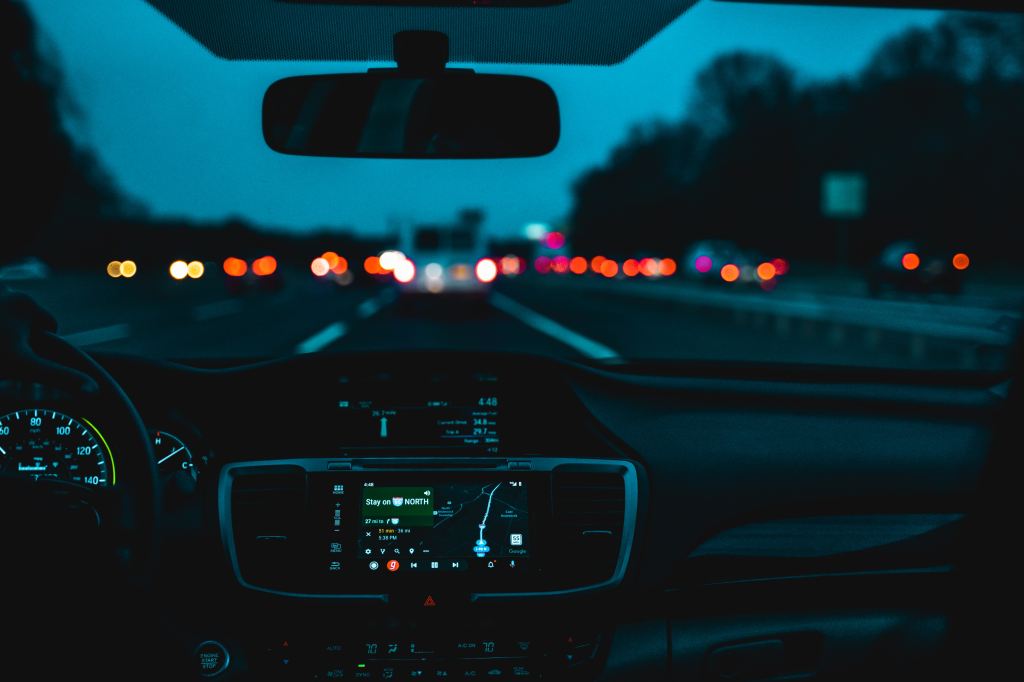
Cover picture credit: Anvesh
The ease to obtain a driving license varies from country to country. My first driving license in India for a motor bike or for a car was a smooth process, so much that I don’t really remember it anymore.
I moved to Belgium in 2015, but until 2021 I never felt the need to acquire a driving license. Because my lab was just a short bike ride away, I could peddle to it without much thinking. Occasionally, I would take the city bus to my lab, which also worked like a charm most of the time. However, not having a driving license did sometimes limit my reach to places that I could not reach either on cycle/bike or by bus, like travelling to the Brouwerij de Sint-Sixtusabdij van Westvleteren, the place where the famous Wesvleteren 12 beer is brewed (rated multiple times as the best beer in the world) or to the tiny Belgian town of Spa, from where the word ‘spa’ comes from. So, in Dec 2021, I decided to apply for a license to drive a car (driving license category B) and start the arduous journey that will take me 1.5 years to finally be qualified to drive in Belgium.
As my Indian driving license was not recognized in Belgium, and I had to apply for the Belgian driving license from scratch. In short, this included a theoretical exam (in Dutch with an interpreter for English) followed by a minimum 20 hours of driving lessons with a driving school to be eligible for a provisional driving license, a waiting period of 3-months for self practice and then finally the practical exam. The following is based on my experience about the journey to obtain a car driving license (category B).
The following process to obtain a driving license is applicable if you applying in the Flanders province in Belgium. If you are applying from Brussels or Wallonia provinces, the process may have some variations.
Theoretical Exam
The theoretical exam in 2021 was a computer-based, timed, multiple choice question (MCQ) type test where you must score at least a 41 out of 50. You will be awarded one point for correctly answering a MCQ or would be deducted a point for each wrong answer, except for certain options where if you make a serious mistake, you can be deducted 5 points.
The exam on the computer appeared in Dutch and a person (interpreter) read the questions followed by the multiple choice options in English. We had, I think, 30 seconds to select the correct answer, before the next question appeared. After the question was read aloud in English, the interpreter proceeded to read the 4 options to select the correct answer. This was the most tricky part; by the time the interpreter was finished reading the last of the 4 options, if was very difficult to remember what was the translation of the first option. Sometimes it would be difficult to even remember what the question was. My remedial knowledge of Dutch helped a bit though.
In our exam slot, we were about 20 candidates, and after the completion of the test, we discovered that only 4 had passed the test. My wife and I were among those four. We breathed a sigh of relief.
This system of oral interpretation has recently been changed, where new applicants can listen to the questions and the options in English via a headphone provided by the exam center. This is a big improvement.
The 20-hr driving lessons and self-practice
Soon after qualifying the theoretical exam, I started the mandatory 20-hour driving lessons from an accredited driving school. Since most of the driving schools had a couple of months of waiting list to enroll for the lessons (at least in Leuven), I tried to find one where I could start as soon as possible. My search led me to Erasmus Rijschool in Leuven. If you plan to enroll here for your lessons, request for the driving instructor Sylvian, he’s the best; both my wife and I concur on this. This was by far the most expensive process in the whole story. For these lessons, I chose a manual gear option rather than automatic because if one is qualified with the manual gear option, that person is allowed to drive both manual as well as automatic cars, but the vice versa is not possible.
After the ten 2-hr lessons spread over about 1.5 months, the driving instructor will judge if you are ready to drive alone or not. I was approved for this, after which I applied for my provisional driving license. With a provisional license, you can buy a car (or rent one) and practice driving by yourself or with someone who has at least 8-years of driving experience. As I was not planning to buy a car immediately, I used Cambio car-sharing service to practice over the weekends for the next 3 months by myself. This gave me the much needed confidence to be able to drive comfortably within new rules and without the presence of a driving instructor.
With my experience of driving in India, learning to drive in Belgium was twice as difficult, because, first I had to unlearn some of my driving instincts from India and then learn to drive within the rules in Belgium. The first and the most obvious case was the switch from left hand traffic to right hand traffic, adjusting to which was not very difficult. However, this switch came with additional secondary complications such as swapping of the indicator lever with the windshield wiper lever, and the gearbox being on the right hand side now. To unlearn my driving habits and relearn these took about 2-3 classes (4-6 hours of drive). Another habit that I had to unlearn was to reduce the excessive use of clutch. When driving in India, we usually always keep one foot on the clutch because you will be frequently applying breaks (because of high traffic) and so the use of clutch is typically higher. However, my driving instructor asked me to minimize my clutch use and rest my foot on the side, as excessive use of clutch increases the wear and tear and in turn affects the fuel efficiency of the car; and if the examiner sees my foot on the clutch too long I could get negative points in the exam. A few other things that I had difficulty learning were to constantly look at (so many different) traffic signs and adjust my driving accordingly, frequent changes of driving speeds, attempting to quickly identifying one way traffic or no entry roads (based on traffic signs again). Finally, the mammoth of all the difficulties was knowing which driver get priority at junctions, intersections, roundabouts and those tiny streets joining the driving road. Learning to give and take priority took a few months to come instinctively.
The practical driving exam (and the Risk Perception Test)
After receiving the provisional driving license, one has 18 months before it expires to apply for the practical exam. If in case the provisional driving license expires before you can qualify the practical exam, you will have to apply for a renewal; however, with this renewal, you will not be allowed to drive alone by yourself. You will have 2 options, first, practice driving with a qualified instructor from any driving school (very expensive as mentioned before), and second, you can choose up to 2 people who have at least 8 years of driving experience with whom you can practice driving (they need to be registered in the system I think, but I am not sure). This could be a serious problem if you are living abroad like me and do not have any family member around you who can register to accompany you for driving practice.
I attempted my (first) practical exam immediately after finishing the 3-month self practice period (post-20 hour lessons). Since officially the exam has to be conducted in Dutch, I was required to bring an interpreter with me to the exam center. As for the car, I could request that through the driving school, along with the driving instructor who would accompany me for the exam. So, in the car, I was the driver, my driving instructor was next to me, behind me was the Dutch-to-English interpreter and next to the interpreter was the examiner. For navigation, you would have 2 options, either navigate using GPS or using road signs, for e.g., the examiner would say take the road to Haasrode at a specific intersection, and I should be proficient enough to read the road signs indicating the direction to Haasrode. I chose to navigate using road signs (as that’s what I was practicing with my driving instructor).
On reaching in the exam center, I first had to give the Risk Perception Test, which is a computer-based simulator-type test which assesses how you react to potential risks when driving. The exam shows you a video (as a car simulator) where you are on the driver seat; you will also see other views such as side mirrors and the rear-view mirror on the screen. The video will run for about a minute and then you will have to select multiple correct answers about what and where the potential risky situations occurred in the video. The risk could be, for example, a cyclist on the right, a person about to cross at the zebra-crossing, a car coming for a priority street etc. You are shown 4-5 such videos and must score at least 6 points out of 10 to qualify. The interesting part is that after the Risk Perception test, you will directly proceed to the practical exam without knowing if you passed the simulator test or not; only after completing the practical exam you will know the results of the risk perception test.
The practical exam will begin with the examiner asking a few random questions about the car (for e.g., how would you know the tires need changing, where does the engine oil, water and coolant go, etc). Next, the examiner will ask you to go in the car and turn on the lights, high beam, indicator, horn, wiper etc., to check if the car is working properly for the exam and if the applicant knows how to do these operations. This will be followed by a random selection of 2 driving maneuvers that I would have to perform (e.g. driving in reverse for a few meters, parallel parking, forward/backward parking or taking a U-turn). These maneuvers have to be completed efficiently in as minimum moves as possible to get a full score. My maneuver selection included a parallel parking and a forward parking.
Finally, we set off for the driving test which typically lasts for 30-40 mins (including maneuvers and back to the exam center). My exam route route started with driving on the highway, and then moving towards sub-urban areas. During my (first) exam I made a critical mistake of going ahead on an orange light (when it was possible to stop on time), which led to an immediate cancellation of my test. I must say that this was the first time I made such a stupid and obvious mistake, which was clearly wrong. This led to the termination of my exam, and I was asked to re-apply. After working so much (the theory exam, 20-hr lessons, self practice), I was very nervous on the practical exam day, which also contributed to my wrong decision making of not stop on the orange light. It was very disappointing.
For the next (second) attempt, I re-applied within 2 weeks, and I failed again. The feedback from the examiner was that during driving I was not thinking well ahead in advance to prepare for correct driving actions needed to be taken (for e.g., gear change, looking in the rear-view mirror often, planning on taking or giving priority etc.). Since this was the second time that I failed the practical exam, I had to take another mandatory 6-hours of driving lessons from the driving school. I decided to take a short break because this situation really disappointed me. Furthermore, I had many other engagements coming up in my personal and professional life, that I did not have enough time to re-take the lessons and the exam again soon.
I took the mandatory 6-hours driving lessons about a couple of months later, while simultaneously doing a rigorous self-practice (weekends and after work on weekdays), followed by immediate (third) practical exam. This time, I passed with flying colors. The examiner had only one minor feedback for improvement, and everything else was great. The following week, I applied for the final driving license at the city hall, and received it within a week.
Closing Remarks
Obtaining a car driving license in Belgium is a long, tedious and expensive process. I have been told that although this process is similar in other European countries but can still differ in terms of how expensive it is. I am very happy to finally get my driving license and have more independence in terms of mobility.
Useful links:
- www. vlaand eren.be/en/how-to-obtain-a-category-b-driving-licence
- www. rijbewijs-on line.be/en/belgium/driving-license/driving-license-b
- www. auto securite.be/en/permis-de-conduire/examens/categorie-b/
- www. auto veiligheid.be/rijbewijs
- www. mijnrijbe wijs.eu/risicoperceptietest
- www. risico perceptie-test.be/
- www. driving licence-belgium.be/


 guptamihir.com
Leave a comment